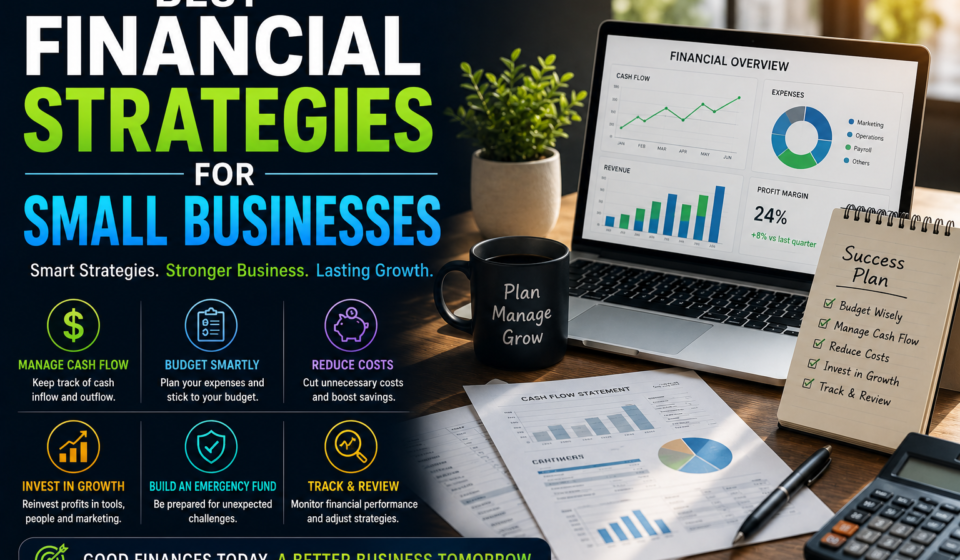

Managing money effectively is one of the biggest challenges for a small business. A company can have strong sales and still experience financial problems if cash flow, expenses, taxes, or debt are not managed carefully.
Good financial management helps business owners understand where money is coming from, where it is going, and how much is available for future growth. It can also make it easier to prepare for unexpected expenses and make better decisions.
The right financial strategy depends on the business model, industry, size, location, and goals. However, several practical principles can help most small businesses build a stronger financial foundation.
Separate Business and Personal Finances
One of the first steps for financial organization is keeping business and personal money separate.
Use a dedicated business bank account for business income and expenses whenever possible.
Separating finances can make it easier to:
- Track business performance
- Organize accounting records
- Prepare tax information
- Monitor expenses
- Understand cash flow
- Maintain clearer financial records
Mixing personal and business transactions can make financial management unnecessarily complicated.
Create a Business Budget
A business budget provides a plan for how money will be earned and spent.
A basic budget can include:
- Expected revenue
- Operating expenses
- Payroll
- Rent
- Technology costs
- Marketing
- Taxes
- Loan payments
- Emergency reserves
- Planned investments
A budget should not be treated as a fixed document. Review it regularly and adjust it when business conditions change.
Track Cash Flow
Cash flow is one of the most important financial measures for a small business.
Cash flow tracks money entering and leaving the company.
A business may be profitable on paper but still struggle if customers pay slowly while suppliers and employees need to be paid immediately.
Monitor:
- Customer payments
- Supplier payments
- Payroll
- Taxes
- Loan obligations
- Operating expenses
- Large planned purchases
Understanding cash flow can help business owners identify potential shortages before they become serious problems.
Build a Cash Reserve
An emergency cash reserve can help a business handle unexpected expenses or temporary declines in revenue.
Potential emergencies include:
- Equipment repairs
- Unexpected bills
- Slow sales
- Technology problems
- Supplier increases
- Economic downturns
The appropriate reserve depends on the business and its expenses.
A company with predictable recurring revenue may have different cash requirements from a seasonal business.
Control Operating Expenses
Expense management does not mean cutting every cost.
The goal is to understand which expenses create value and which can be reduced or eliminated.
Review recurring expenses such as:
- Software subscriptions
- Office costs
- Advertising
- Insurance
- Professional services
- Utilities
- Equipment
- Payment processing
Small recurring costs can become significant when accumulated over an entire year.
Review Expenses Regularly
Create a habit of reviewing business expenses.
Ask questions such as:
- Is this expense necessary?
- Does it support revenue?
- Can the same service be obtained at a better price?
- Is the business paying for unused services?
- Can the expense be reduced without hurting operations?
Regular reviews can prevent unnecessary spending from becoming permanent.
Improve Invoicing
Slow invoicing can create cash flow problems.
Businesses should establish a consistent invoicing process.
Include:
- Customer information
- Invoice number
- Date
- Products or services
- Payment terms
- Total amount
- Accepted payment methods
- Due date
Sending invoices promptly can help reduce unnecessary payment delays.
Establish Clear Payment Terms
Customers should understand when payment is expected.
Payment terms should be communicated before work begins whenever possible.
Depending on the business, terms may include:
- Payment before service
- Payment upon delivery
- Net payment terms
- Installment payments
- Recurring billing
Clear terms can reduce misunderstandings and improve cash flow.
Monitor Accounts Receivable
Accounts receivable represents money customers owe the business.
Regularly review outstanding invoices.
Organize receivables by:
- Current
- Slightly overdue
- Significantly overdue
- Long outstanding
Following up consistently can help businesses collect money more efficiently.
Avoid Excessive Debt
Debt can help a business grow, but excessive borrowing can create financial pressure.
Before taking on debt, consider:
- Interest rate
- Monthly payment
- Loan term
- Total repayment cost
- Business cash flow
- Expected return from the investment
Borrowing should support a realistic business objective rather than cover ongoing financial problems without a plan.
Maintain a Strong Credit Profile
Business credit can affect access to financing and supplier terms.
Depending on the country and financial system, businesses may benefit from:
- Paying obligations on time
- Maintaining accurate financial records
- Monitoring business credit information
- Keeping debt manageable
- Establishing relationships with financial institutions
A strong credit profile can provide more options when financing is needed.
Plan for Taxes
Tax obligations should be included in financial planning rather than treated as an unexpected expense.
Keep records of:
- Revenue
- Deductible expenses
- Payroll
- Business purchases
- Tax payments
- Relevant financial documents
Tax rules differ by country and business structure, so professional advice may be appropriate.
Set Aside Money for Taxes
If taxes are not automatically withheld from business income, consider setting aside funds regularly.
This can reduce the risk of facing a large unexpected tax bill.
The amount required depends on the business structure, income, expenses, and applicable tax rules.
Understand Gross Profit
Gross profit is generally revenue minus the direct costs associated with producing goods or delivering services.
Understanding gross profit can help a business determine whether its pricing and direct costs are sustainable.
For example, increasing sales does not necessarily improve financial health if the cost of fulfilling those sales rises too quickly.
Monitor Profit Margins
Profit margin helps show how much of revenue remains after relevant expenses.
Tracking margins over time can reveal whether profitability is improving or declining.
If margins fall, investigate possible causes such as:
- Higher supplier costs
- Discounting
- Increased payroll
- Rising marketing expenses
- Pricing problems
- Lower productivity
Review Pricing
Pricing is a major financial decision.
Small businesses should regularly review whether prices reflect:
- Production costs
- Labor
- Overhead
- Market conditions
- Customer value
- Desired profit margin
Underpricing can create growth without profitability.
Avoid Competing Only on Price
Lower prices may attract customers, but competing entirely on price can reduce margins.
Small businesses can instead focus on value through:
- Service
- Quality
- Convenience
- Expertise
- Customer support
- Specialized products
Strong value can make pricing more sustainable.
Forecast Revenue
Revenue forecasting involves estimating future sales based on available information.
Consider:
- Historical sales
- Seasonal patterns
- Existing contracts
- Customer pipeline
- Market conditions
- Pricing changes
- Marketing plans
Forecasts do not need to be perfect. Their main purpose is to support planning.
Create Multiple Financial Scenarios
Businesses can prepare for different possibilities.
For example:
Conservative Scenario
Revenue decreases while important expenses remain stable.
Expected Scenario
Revenue follows the current business plan.
Growth Scenario
Revenue increases and additional investment becomes necessary.
Scenario planning can help business owners prepare for changing conditions.
Manage Inventory Carefully
For businesses that sell physical products, inventory can tie up significant amounts of cash.
Too much inventory can create storage costs and increase the risk of unsold products.
Too little inventory can lead to stockouts and lost sales.
Monitor:
- Inventory turnover
- Slow moving products
- Seasonal demand
- Supplier lead times
- Storage costs
Negotiate With Suppliers
Supplier relationships can affect profitability.
Businesses may be able to negotiate:
- Better pricing
- Payment terms
- Volume discounts
- Shipping arrangements
- Minimum order quantities
However, cheaper pricing should not come at the expense of product quality or reliability.
Evaluate Marketing Return
Marketing is an investment, but not every campaign produces the same results.
Track metrics such as:
- Leads
- Sales
- Customer acquisition cost
- Conversion rate
- Revenue
- Repeat purchases
This can help identify which marketing activities contribute to business growth.
Understand Customer Acquisition Cost
Customer acquisition cost measures how much a business spends to acquire a customer.
For example, if a company spends $5,000 on marketing and sales activities and acquires 100 customers, its customer acquisition cost would be $50 per customer.
Compare acquisition costs with the revenue and long term value generated by customers.
Focus on Customer Retention
Acquiring new customers can be expensive.
Retaining existing customers can sometimes improve financial efficiency because established customers may purchase repeatedly.
Strategies may include:
- Good customer service
- Loyalty programs
- Personalized communication
- Product improvements
- Reliable delivery
- Customer support
Understand Customer Lifetime Value
Customer lifetime value estimates the revenue or profit a business may generate from a customer over the relationship.
A business can compare customer lifetime value with customer acquisition costs to evaluate the sustainability of its growth strategy.
Use Accounting Software
Accounting software can help small businesses organize financial information.
Depending on the system, features may include:
- Invoicing
- Expense tracking
- Financial reports
- Payroll
- Tax records
- Bank reconciliation
- Cash flow monitoring
Automation can reduce manual work and improve financial visibility.
Review Financial Statements
Business owners should understand basic financial statements.
Income Statement
Shows revenue, expenses, and profit over a period.
Balance Sheet
Shows assets, liabilities, and equity at a specific point in time.
Cash Flow Statement
Shows how cash moves into and out of the business.
Understanding these statements can help owners make better financial decisions.
Monitor Key Financial Metrics
Small businesses do not need hundreds of metrics.
Useful measurements may include:
- Revenue
- Gross margin
- Net profit margin
- Cash balance
- Accounts receivable
- Accounts payable
- Customer acquisition cost
- Customer lifetime value
- Inventory turnover
- Debt payments
Choose metrics that directly relate to the business model.
Build a Financial Dashboard
A simple financial dashboard can bring important numbers together.
Review it monthly or more frequently when necessary.
A dashboard might show:
- Monthly revenue
- Monthly expenses
- Cash balance
- Outstanding invoices
- Debt
- Profit margin
- Sales pipeline
This makes it easier to identify changes quickly.
Plan for Business Growth
Growth requires money.
Before expanding, estimate the financial impact of:
- Hiring employees
- Opening another location
- Buying equipment
- Increasing inventory
- Expanding marketing
- Developing products
- Entering new markets
Growth without adequate financial planning can create cash flow problems.
Avoid Growing Too Quickly
Rapid growth can sometimes create financial pressure.
A business may need to spend money on employees, inventory, equipment, and marketing before customers pay for those investments.
Growth should therefore be balanced with available cash and financing capacity.
Build Relationships With Financial Professionals
Small business owners do not need to handle every financial issue alone.
Depending on their circumstances, they may work with:
- Accountants
- Bookkeepers
- Tax professionals
- Financial advisers
- Business lawyers
- Banking professionals
Professional advice can be especially useful for taxes, financing, business structure, and major investments.
Review Business Insurance
Insurance can protect a business against certain unexpected financial losses.
Depending on the business, coverage may include:
- Property
- Liability
- Professional services
- Business interruption
- Workers’ compensation
- Cyber risks
The appropriate coverage depends on the business and local requirements.
Prepare for Economic Changes
Economic conditions can affect customer demand, supplier prices, borrowing costs, and business confidence.
Small businesses can prepare by:
- Maintaining cash reserves
- Managing debt
- Monitoring costs
- Diversifying customers where appropriate
- Reviewing pricing
- Maintaining flexible operating plans
Preparation can make it easier to respond when conditions change.
Common Financial Mistakes Small Businesses Make
Mixing Personal and Business Money
This makes accounting and financial analysis more difficult.
Ignoring Cash Flow
Strong sales do not guarantee that enough cash is available when bills are due.
Failing to Track Expenses
Unmonitored expenses can gradually reduce profitability.
Underpricing Products
Low prices can create sales without sufficient margins.
Taking on Too Much Debt
High debt payments can restrict future business decisions.
Ignoring Taxes
Unexpected tax obligations can create serious cash flow problems.
Relying on One Customer
Heavy dependence on one customer can increase financial risk.
Expanding Too Quickly
Growth can require significant upfront spending.
Not Reviewing Financial Reports
Business owners need accurate financial information to make informed decisions.
A Simple Financial Strategy for Small Businesses
A practical approach can include:
- Separate personal and business finances.
- Create a realistic budget.
- Track cash flow regularly.
- Maintain an emergency reserve.
- Monitor expenses.
- Invoice customers promptly.
- Follow up on overdue payments.
- Review pricing and profit margins.
- Manage debt carefully.
- Plan for taxes.
- Monitor key financial metrics.
- Review financial statements.
- Forecast revenue.
- Prepare different financial scenarios.
- Reassess the strategy as the business grows.
Final Thoughts
Strong financial management can provide the foundation for sustainable small business growth.
Business owners should focus on more than revenue. Cash flow, profitability, expenses, debt, taxes, pricing, and financial reserves all influence the long term health of a company.
The most effective financial strategy is one that gives the owner a clear understanding of the business’s current position while preparing for future opportunities and challenges.
Small businesses do not need complicated financial systems to get started. Consistent budgeting, accurate records, regular cash flow monitoring, responsible borrowing, and careful expense management can make a meaningful difference.
As the business becomes larger, financial planning can become more sophisticated. Building good habits early can make that transition much easier.
Frequently Asked Questions
What is the most important financial strategy for a small business?
Cash flow management is one of the most important areas because a business needs sufficient cash to pay its ongoing obligations.
Why should businesses separate personal and business finances?
Separate accounts make it easier to track business performance, organize records, manage expenses, and prepare tax information.
How can a small business improve cash flow?
Businesses can improve cash flow by invoicing quickly, collecting payments on time, controlling expenses, managing inventory, and maintaining appropriate cash reserves.
How much cash should a small business keep in reserve?
There is no universal amount. The appropriate reserve depends on operating expenses, revenue stability, industry conditions, and business risk.
Why is budgeting important for small businesses?
A budget helps businesses plan revenue and expenses and identify potential financial problems before they become serious.
How often should a small business review its finances?
Many businesses benefit from reviewing key financial information monthly, while cash flow and bank balances may need more frequent monitoring.
What financial statements should a small business understand?
The income statement, balance sheet, and cash flow statement are three important financial reports.
What is gross profit?
Gross profit is generally revenue minus the direct costs associated with producing goods or delivering services.
What is profit margin?
Profit margin shows how much of a company’s revenue remains as profit after relevant expenses.
Why is pricing important for small businesses?
Pricing affects revenue, margins, customer demand, and profitability. Prices should reflect costs, customer value, and business objectives.
Should small businesses use accounting software?
Accounting software can help automate invoicing, expense tracking, reporting, reconciliation, and other financial tasks.
How can a business reduce unnecessary expenses?
Review recurring costs, eliminate unused services, compare suppliers, monitor subscriptions, and evaluate whether each expense supports business objectives.
Should small businesses use debt?
Debt can support growth when used responsibly, but businesses should consider interest costs, repayment obligations, cash flow, and the expected benefit of borrowing.
How can a small business improve its credit profile?
Paying obligations on time, keeping debt manageable, maintaining accurate records, and monitoring relevant business credit information can help.
Why is tax planning important?
Tax planning helps businesses prepare for tax obligations and avoid unexpected financial pressure.
What is customer acquisition cost?
Customer acquisition cost measures the average amount a business spends to acquire a new customer.
What is customer lifetime value?
Customer lifetime value estimates the value a customer may generate over the duration of the relationship with a business.
Why should businesses track customer retention?
Retaining customers can support recurring revenue and reduce the need to continually spend money acquiring new customers.
How can inventory affect cash flow?
Inventory uses cash before products are sold. Excess inventory can tie up money and increase storage or obsolescence risks.
What is revenue forecasting?
Revenue forecasting is the process of estimating future sales based on historical performance, customer demand, market conditions, and other relevant information.
What is scenario planning?
Scenario planning involves preparing financial forecasts for different possible business conditions.
How can a small business prepare for an economic downturn?
Maintaining cash reserves, controlling expenses, managing debt, monitoring demand, and maintaining flexible plans can improve financial resilience.
Should small businesses hire an accountant?
An accountant can provide valuable assistance with bookkeeping, taxes, financial reporting, planning, and other areas depending on the business’s needs.
What is a financial dashboard?
A financial dashboard is a collection of important business financial metrics presented in an easy to monitor format.
How can small businesses improve profitability?
Businesses can improve profitability by increasing revenue, improving pricing, controlling costs, reducing waste, improving productivity, and focusing on profitable customers and products.
Why should small businesses monitor profit margins?
Profit margins show how much revenue remains after relevant costs and can reveal whether business performance is improving or declining.
How can small businesses prepare for unexpected expenses?
Maintaining a cash reserve, controlling debt, reviewing insurance coverage, and monitoring cash flow can help prepare for unexpected costs.
What is the biggest financial mistake a small business can make?
There is no single mistake that applies to every business, but ignoring cash flow, taking on excessive debt, failing to track expenses, and avoiding financial planning can create serious problems.
How often should small businesses update their financial strategy?
Financial strategies should be reviewed regularly and adjusted when revenue, expenses, market conditions, financing needs, or business goals change.