
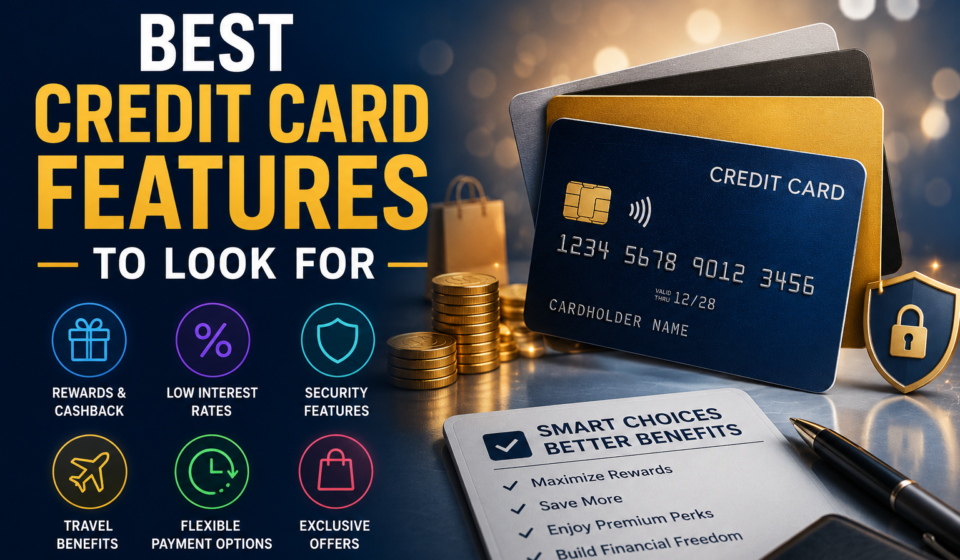

Choosing a credit card can be difficult because different cards offer different benefits, fees, rewards, interest rates, protections, and spending features. A card that works well for one person may not be suitable for another.
The best credit card is not necessarily the one with the biggest rewards or the most attractive promotional offer. A good choice should match your spending habits, repayment ability, financial goals, and tolerance for fees.
Before applying, it is useful to understand the most important credit card features and how they can affect the overall value of a card.
What Makes a Credit Card Good?
A good credit card generally offers useful features without unnecessary costs.
Important factors to consider include:
- Annual fee
- Interest rate
- Rewards
- Cashback
- Welcome offers
- Grace period
- Foreign transaction fees
- Balance transfer terms
- Credit limit
- Fraud protection
- Purchase protection
- Travel benefits
- Customer service
- Mobile app features
Not every card needs to offer every feature. The goal is to find features that are actually useful for your financial situation.
Low Annual Fee
The annual fee is one of the first costs to check when comparing credit cards.
Some cards have no annual fee, while premium cards may charge a significant yearly fee in exchange for additional benefits.
A card with an annual fee can still be worthwhile if the benefits you actually use are worth more than the cost.
For example, a card might offer travel benefits, rewards, or insurance that exceed its annual fee.
Low Interest Rate
The interest rate is important if you sometimes carry a balance from one billing cycle to another.
Credit card interest can become expensive when balances are not paid in full.
A lower interest rate can reduce the cost of carrying debt, although the best strategy is generally to avoid unnecessary interest by paying the statement balance on time when possible.
Introductory Interest Rate
Some credit cards offer a temporary introductory interest rate.
This may apply to purchases, balance transfers, or both depending on the card.
Before using an introductory offer, check:
- How long the promotional period lasts
- What interest rate applies afterward
- Which transactions qualify
- Whether balance transfer fees apply
- What happens if a payment is missed
Promotional rates should not be treated as permanent benefits.
Cashback Rewards
Cashback allows cardholders to receive a percentage of eligible spending back.
For example, a card might offer different cashback rates for groceries, dining, fuel, online purchases, or other categories.
Cashback programs can be simple and useful for people who prefer straightforward rewards.
Flat Rate Cashback
Some cards offer the same cashback percentage on most eligible purchases.
This can be attractive because you do not need to track spending categories.
A flat rate structure may be easier to manage than a rewards program with multiple rotating categories.
Category Based Rewards
Other cards provide higher rewards for specific types of purchases.
Examples can include:
- Dining
- Travel
- Groceries
- Fuel
- Online shopping
- Entertainment
Category based rewards can provide strong value if the categories match your normal spending.
Travel Rewards
Travel focused credit cards may offer points or miles for eligible purchases.
Depending on the program, rewards may be used toward:
- Flights
- Hotels
- Travel bookings
- Upgrades
- Other travel related expenses
Travel rewards can be valuable, but their actual worth depends on redemption rules and availability.
Flexible Reward Points
Some cards allow points to be redeemed in several ways.
Possible options may include:
- Statement credits
- Travel
- Gift cards
- Merchandise
- Partner programs
Flexible redemption can be useful because it gives you more options when using accumulated rewards.
Welcome Bonus
Many credit cards offer a welcome bonus for new cardholders who meet certain spending requirements within a specified period.
Before applying, make sure the spending requirement fits your normal budget.
It is generally not sensible to spend more than planned simply to earn a bonus.
Reward Redemption Options
A rewards program is only useful if you can redeem the rewards conveniently.
Check:
- Minimum redemption amount
- Expiration rules
- Redemption methods
- Transfer options
- Blackout restrictions
- Value of points or miles
- Fees associated with redemption
A large number of points does not necessarily mean high value.
Grace Period
A grace period is the period during which eligible purchases may avoid interest when the statement balance is paid according to the card’s terms.
The exact rules vary by issuer and jurisdiction.
Understanding the grace period can help you avoid unnecessary interest charges.
No Foreign Transaction Fees
People who travel internationally may want to consider cards that do not charge foreign transaction fees.
Foreign transaction fees can increase the cost of purchases made in another country or processed through an international merchant.
Check the card’s terms because foreign transaction policies vary.
Travel Insurance
Some premium credit cards offer travel related insurance or protections.
Depending on the card, these benefits may cover certain situations involving:
- Trip cancellation
- Trip interruption
- Lost baggage
- Delayed travel
- Rental vehicles
Coverage conditions can be detailed, so review the terms rather than assuming every situation is covered.
Airport Lounge Access
Some travel credit cards provide airport lounge access.
This can be valuable for frequent travelers who spend significant time in airports.
However, premium cards with lounge benefits may have higher annual fees.
Consider how often you would actually use the benefit before paying for it.
Rental Car Benefits
Certain cards offer rental car related protections or benefits.
Coverage varies considerably.
Some may provide insurance coverage under specific conditions, while others may offer discounts or reward points.
Always review the exact terms before relying on the benefit.
Purchase Protection
Purchase protection can help protect eligible purchases against certain types of loss or damage for a specified period.
Coverage varies by issuer and card.
Some cards may also provide extended warranty benefits on qualifying purchases.
Fraud Protection
Fraud protection is an important feature for any credit card.
Card issuers may monitor transactions for unusual activity and provide tools for reporting unauthorized transactions.
Many cards also offer instant transaction alerts through mobile apps.
Real Time Transaction Alerts
Transaction notifications can help you monitor spending.
Alerts may notify you when:
- A purchase is made
- A payment is received
- A transaction is declined
- Your balance reaches a selected amount
These notifications can make it easier to identify unauthorized activity quickly.
Mobile App Features
A strong mobile app can make credit card management easier.
Useful features may include:
- Balance tracking
- Payment scheduling
- Transaction notifications
- Reward tracking
- Card locking
- Spending analysis
- Digital statements
A good app can help cardholders stay organized and avoid missed payments.
Automatic Payments
Automatic payment options can reduce the risk of missing a payment deadline.
Depending on the issuer, you may be able to automatically pay:
- The minimum payment
- The statement balance
- A fixed amount
Paying the full statement balance can help avoid interest on eligible purchases when the card terms allow it.
Flexible Payment Options
Some credit cards offer different payment arrangements or installment options.
These can allow eligible purchases to be repaid over a specified period.
However, installment plans may involve interest, fees, or other costs.
Always review the total cost before choosing a payment plan.
Balance Transfer Features
A balance transfer allows eligible debt to be moved from one credit card to another.
Some cards offer promotional balance transfer rates.
Before using a balance transfer, consider:
- Transfer fees
- Promotional period
- Post promotional interest rate
- Credit limit
- Eligibility requirements
A balance transfer only makes financial sense when the total cost is lower than the existing debt arrangement.
Credit Limit
The credit limit is the maximum amount you can generally borrow on the card.
A higher limit does not necessarily mean a better card.
What matters is whether the limit is appropriate for your spending needs and financial situation.
Credit Utilization
Credit utilization refers to how much of your available revolving credit you are using.
For example, if you have a $10,000 credit limit and a $2,000 balance, your utilization is 20 percent.
Credit utilization can be one factor considered in certain credit scoring systems.
Keeping balances manageable and paying bills on time can support responsible credit use.
No or Low Late Payment Fees
Late payments can result in fees and may have other consequences.
When comparing cards, check the issuer’s late payment policy.
However, the most important approach is to pay on time rather than choosing a card based only on its late fee.
Contactless Payments
Contactless payment functionality can make everyday purchases faster.
Many cards support contactless transactions, while mobile wallets may also allow users to make payments using compatible smartphones or smart devices.
Digital Wallet Compatibility
Digital wallet compatibility can be useful for people who prefer paying through their mobile devices.
Depending on the issuer and country, cards may work with supported digital wallet services.
Check compatibility before applying if mobile payments are important to you.
Card Security Features
Modern cards may include several security features.
These can include:
- Transaction alerts
- Card locking
- Virtual card numbers
- Fraud monitoring
- Two factor authentication
- Secure online payment tools
These features can help reduce the impact of unauthorized transactions.
Virtual Card Numbers
Some issuers provide virtual card numbers for online purchases.
A virtual card number can offer an additional layer of security because the merchant may not receive the physical card number.
Availability varies by card issuer.
No Foreign Exchange Fees
International users should understand the difference between foreign transaction fees and currency conversion costs.
A card may advertise no foreign transaction fee while still applying an exchange rate when converting currencies.
Always review the issuer’s currency conversion policy.
Credit Building Features
For people trying to establish or rebuild credit, it can be useful to choose a card with responsible credit reporting and manageable requirements.
Secured credit cards may be available for applicants who have limited or damaged credit histories.
The most important factor is responsible use and timely payments.
Student Credit Card Features
Students may have access to cards designed specifically for their financial circumstances.
These cards may have simpler eligibility requirements and rewards focused on common student expenses.
Students should pay particular attention to interest rates and fees.
Business Credit Card Features
Business credit cards may offer rewards and expense management tools designed for businesses.
Features can include:
- Employee cards
- Expense tracking
- Business rewards
- Spending controls
- Accounting integrations
- Business reporting
Business cards can be useful for separating business and personal expenses.
Customer Service
Good customer support can be valuable when you need help with:
- Fraud
- Billing problems
- Rewards
- Payments
- Disputed transactions
- Card replacement
Before choosing a card, consider the issuer’s reputation for customer service and available support channels.
Credit Card Fees to Watch
Rewards can sometimes distract people from important costs.
Check for:
- Annual fees
- Foreign transaction fees
- Balance transfer fees
- Cash advance fees
- Late payment fees
- Returned payment fees
- Over limit fees where applicable
- Installment fees
A card with fewer benefits but lower overall costs may provide better value.
Cash Advance Features
Credit cards may allow cash withdrawals, but cash advances can be expensive.
They may involve:
- Cash advance fees
- Higher interest rates
- Interest beginning immediately
Cash advances should generally be treated differently from ordinary purchases.
How to Compare Credit Cards
A simple comparison process can make choosing a card easier.
Step 1: Understand Your Spending
Review where you normally spend money.
Step 2: Identify Your Main Goal
Decide whether you want cashback, travel rewards, lower interest costs, credit building, or another feature.
Step 3: Compare Fees
Look beyond rewards and examine the total cost.
Step 4: Review Reward Rules
Understand how rewards are earned and redeemed.
Step 5: Check Interest Rates
Pay particular attention if you may carry a balance.
Step 6: Review Additional Benefits
Consider insurance, purchase protection, travel benefits, and security tools.
Step 7: Read the Terms
Review the official card terms before applying.
Common Credit Card Mistakes
Choosing Rewards Over Cost
A large rewards program may not compensate for high fees or interest.
Spending More to Earn Rewards
Rewards should not encourage unnecessary spending.
Carrying a Balance for Rewards
Interest charges can quickly outweigh the value of rewards.
Ignoring Expiration Rules
Some rewards programs may have expiration or account activity requirements.
Missing Payment Dates
Late payments can result in fees and potentially affect credit history.
Applying for Too Many Cards
Multiple applications within a short period may affect certain credit scoring factors and can make financial management more complicated.
Final Thoughts
The best credit card features depend on how you plan to use the card.
For some people, cashback and low fees may be the most valuable features. Frequent travelers may prioritize travel rewards, lounge access, and international transaction benefits. Someone focused on reducing borrowing costs may care more about the interest rate.
Before applying, compare the full cost of the card, understand the reward structure, review important terms, and consider whether the benefits match your actual spending habits.
A credit card should support your financial goals rather than encourage unnecessary spending.
Frequently Asked Questions
What is the most important credit card feature?
There is no single feature that is best for everyone. Annual fees, interest rates, rewards, security, and benefits should be considered based on your financial needs.
Is a no annual fee credit card better?
Not always. A card with an annual fee can provide greater value if its benefits and rewards exceed the cost.
What is cashback?
Cashback is a reward that returns a percentage of eligible spending to the cardholder.
What are credit card rewards?
Rewards are benefits earned from eligible purchases. They may include cashback, points, miles, discounts, or other benefits.
What is a credit card welcome bonus?
A welcome bonus is a promotional reward offered to eligible new cardholders who meet specific requirements within a defined period.
Should I choose a card with a low interest rate?
A low interest rate can be important if you expect to carry a balance. If you consistently pay your statement balance in full, rewards and fees may be more important factors.
What is a grace period?
A grace period is a period during which eligible purchases may avoid interest when the account is managed according to the card’s terms.
What is a foreign transaction fee?
A foreign transaction fee is a charge that may apply when making certain purchases outside the card’s home country or through an international merchant.
Are travel rewards worth it?
They can be valuable for people who travel frequently and can use the rewards effectively. The value depends on the program’s earning and redemption rules.
What is a balance transfer?
A balance transfer moves eligible credit card debt from one card to another, often with specific fees and promotional terms.
What is credit utilization?
Credit utilization is the amount of revolving credit being used compared with the available credit limit.
Why are transaction alerts useful?
Transaction alerts can help you monitor purchases and identify potentially unauthorized activity quickly.
What is purchase protection?
Purchase protection is a benefit that may provide coverage for eligible purchases under specific conditions.
Do all credit cards offer fraud protection?
Protection and dispute procedures vary by issuer and jurisdiction. Review the card’s terms to understand the protections available.
What is a virtual card number?
A virtual card number is an alternative card number that can sometimes be used for online purchases instead of the physical card number.
What is a credit limit?
A credit limit is the maximum amount you can generally borrow using the credit card at a given time.
Are higher credit limits better?
A higher limit can provide more flexibility, but it does not automatically make a card better. Responsible use remains important.
Should beginners choose a rewards card?
A rewards card can be suitable if the rewards match normal spending and the cardholder can manage payments responsibly.
Can credit card rewards save money?
They can provide value when earned through spending you would make anyway and when the card’s fees and other costs do not outweigh the rewards.
Should I spend more to earn credit card rewards?
Generally, rewards should not be a reason to spend more than planned.
What fees should I check before applying?
Check the annual fee, interest rate, foreign transaction fee, balance transfer fee, cash advance fee, late payment fee, and other applicable charges.
Is a low annual fee more important than rewards?
It depends on your spending. Compare the total annual value of rewards and benefits against the fees.
What is a cash advance?
A cash advance allows a cardholder to withdraw cash using a credit card. It can involve fees and higher interest costs.
Are contactless payments safe?
Contactless payments include security measures, but users should still monitor transactions and report unauthorized activity promptly.
Can a credit card help build credit?
Responsible credit card use can contribute to credit history where the issuer reports activity to credit reporting agencies.
What is the best credit card for travel?
The best travel card depends on where you travel, how frequently you travel, the rewards program, fees, and the benefits you will actually use.
What is the best credit card for cashback?
A good cashback card is one that offers strong rewards in categories that match your regular spending while keeping fees and restrictions reasonable.
What should I check before applying for a credit card?
Review eligibility requirements, annual fees, interest rates, rewards, promotional terms, foreign transaction fees, credit limits, security features, and other important conditions.
What makes a credit card valuable?
A credit card is valuable when its rewards, benefits, costs, and features fit your spending habits and financial goals.
Is the card with the most benefits always the best?
No. Additional benefits may come with higher fees or complicated terms. The best card is the one that provides useful value for your actual needs.


