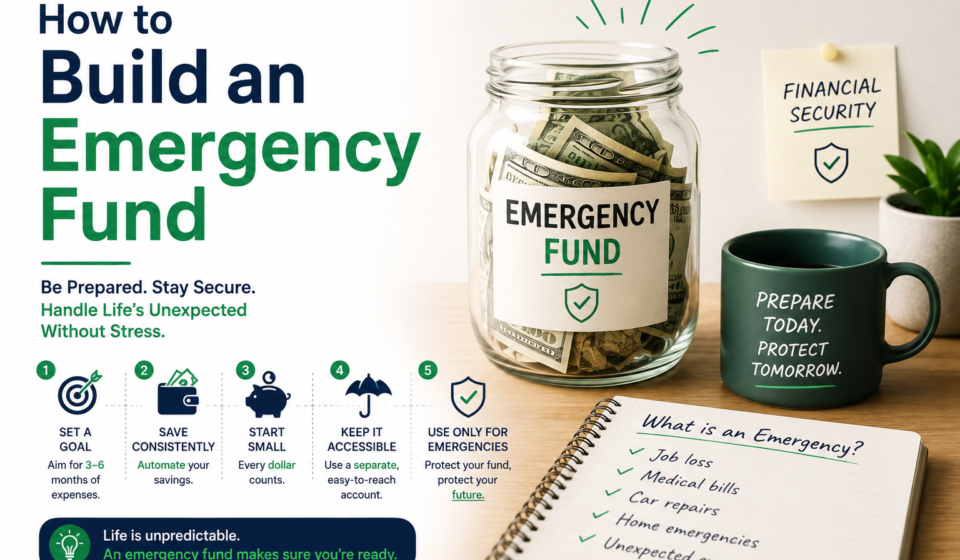

Financial stability is not only about earning money or investing wisely. One of the most important foundations of personal finance is having an emergency fund. Life is unpredictable, and unexpected expenses can arise at any time. Medical emergencies, job loss, car repairs, home maintenance, economic downturns, and family emergencies can create financial stress if individuals are unprepared.
An emergency fund serves as a financial safety net, providing immediate access to money during difficult situations. Having emergency savings can help prevent debt accumulation, reduce financial anxiety, and improve long-term financial security.
Despite its importance, many people delay building an emergency fund because they believe they need large amounts of money to get started. In reality, creating an emergency fund is a gradual process that can begin with small, consistent contributions.
Whether you are starting your financial journey, recovering from financial setbacks, or strengthening your existing financial plan, understanding how to build an emergency fund is essential. This guide explains what an emergency fund is, why it matters, how much you should save, practical strategies for building savings, and common mistakes to avoid.
What Is an Emergency Fund?
An emergency fund is a dedicated savings reserve set aside specifically for unexpected financial emergencies and urgent expenses.
Unlike regular savings accounts that may be used for vacations, shopping, or planned purchases, an emergency fund is intended only for unforeseen situations that require immediate financial resources.
Examples of emergencies include medical bills, job loss, vehicle repairs, home repairs, emergency travel, family crises, and other unexpected financial obligations.
The primary purpose of an emergency fund is to provide financial protection and reduce reliance on borrowing during difficult situations.
Emergency savings help individuals maintain financial stability while avoiding excessive debt, missed payments, or liquidation of long-term investments.
A properly maintained emergency fund serves as an important component of overall financial planning.
Why an Emergency Fund Is Important
Unexpected financial challenges affect nearly everyone at some point.
Without emergency savings, individuals may be forced to rely on credit cards, personal loans, or other forms of debt to cover urgent expenses. High-interest borrowing can create long-term financial problems and increase financial stress.
An emergency fund provides peace of mind by ensuring that financial resources are available when needed most.
Emergency savings also support financial independence and flexibility. Individuals with adequate reserves often have greater freedom to make important life decisions without immediate financial pressure.
Additionally, emergency funds help protect long-term financial goals by reducing the need to withdraw retirement savings or sell investments during unfavorable market conditions.
Building emergency savings is one of the most effective ways to improve financial security and resilience.
Common Financial Emergencies
Financial emergencies can take many forms.
Job loss represents one of the most significant financial challenges because it may eliminate a primary source of income for an extended period.
Medical emergencies can result in unexpected healthcare expenses, treatment costs, and lost income due to illness or injury.
Automobile repairs often require immediate financial resources to maintain transportation and employment.
Homeowners may encounter emergency repairs involving plumbing, electrical systems, roofing, or structural issues.
Family emergencies, natural disasters, legal expenses, and economic downturns can also create sudden financial burdens.
Because emergencies are unpredictable, maintaining dedicated emergency savings provides valuable protection against uncertainty.
How Much Should You Save in an Emergency Fund?
The amount required for an emergency fund depends on individual circumstances, financial obligations, income stability, and personal risk tolerance.
Many financial experts recommend maintaining emergency savings equal to several months of essential living expenses.
Essential expenses typically include housing costs, food, utilities, transportation, insurance, healthcare, debt payments, and other necessary financial obligations.
Individuals with stable employment and multiple income sources may require smaller emergency reserves.
Conversely, self-employed individuals, business owners, freelancers, and workers with variable income may benefit from maintaining larger emergency funds.
The appropriate amount varies from person to person, but establishing any emergency savings is generally preferable to having no financial reserves at all.
Start Small and Build Gradually
One of the biggest mistakes people make is believing they must save a large amount immediately.
Building an emergency fund is often a long-term process that begins with small, manageable contributions.
Setting an initial goal can make the process feel more achievable and less overwhelming.
Small savings accumulated consistently over time can grow substantially.
Even modest contributions made regularly help establish positive financial habits and create momentum.
Focusing on gradual progress rather than perfection encourages long-term success and reduces the likelihood of abandoning savings goals.
The most important step is simply beginning the process.
Create a Budget to Identify Savings Opportunities
A budget serves as a valuable tool for building emergency savings.
Tracking income and expenses helps identify opportunities to reduce unnecessary spending and redirect money toward savings goals.
Many individuals discover recurring expenses that provide limited value or areas where spending can be reduced without significantly affecting quality of life.
Creating a budget also improves financial awareness and helps prioritize savings.
Budgeting allows individuals to establish realistic savings targets and monitor progress over time.
Financial discipline and consistent budgeting often contribute significantly to successful emergency fund development.
Understanding where money is spent provides valuable insights for improving financial decision-making.
Automate Your Savings
Automation can make building an emergency fund easier and more consistent.
Automatic transfers allow individuals to move money from checking accounts to savings accounts regularly without requiring ongoing decisions.
By automating savings contributions, individuals reduce the likelihood of spending money that was intended for emergency reserves.
Automatic savings strategies also help establish financial discipline and consistency.
Many financial institutions offer automatic transfer features that can be customized according to individual preferences and income schedules.
Even small automatic contributions can produce substantial results over time.
Automation removes many of the psychological barriers associated with saving.
Reduce Unnecessary Expenses
Reducing discretionary spending can accelerate emergency fund growth.
Evaluating spending habits may reveal opportunities to eliminate or reduce nonessential expenses.
Small changes in daily spending behavior can generate meaningful savings over time.
Individuals may choose to reduce entertainment expenses, dining costs, subscription services, impulse purchases, or luxury spending while building emergency reserves.
The objective is not necessarily to eliminate all discretionary spending but rather to align spending decisions with financial priorities.
Temporary sacrifices can contribute significantly to long-term financial security and peace of mind.
Developing mindful spending habits supports both savings goals and overall financial health.
Increase Income When Possible
Increasing income can accelerate the process of building an emergency fund.
Additional income sources may include overtime work, freelance projects, consulting services, part-time employment, or entrepreneurial activities.
Selling unused items or monetizing hobbies may also provide opportunities to generate additional savings contributions.
Temporary income increases directed specifically toward emergency savings can help achieve financial goals more quickly.
Investing in skills development and career advancement may also improve long-term earning potential.
Combining income growth with disciplined spending habits often produces the strongest financial outcomes.
Higher income levels provide greater flexibility and resilience.
Choose the Right Place to Keep Your Emergency Fund
Emergency savings should remain accessible, secure, and separate from everyday spending accounts.
Liquidity is particularly important because emergency funds may need to be accessed quickly during financial emergencies.
At the same time, maintaining a separate account helps reduce the temptation to use emergency savings for nonessential purchases.
Many individuals prefer savings accounts or similar financial products that provide safety and accessibility.
The primary purpose of an emergency fund is financial protection rather than maximizing investment returns.
Because emergencies are unpredictable, preserving capital and maintaining access to funds should remain the highest priorities.
Separating emergency savings from other financial accounts supports financial discipline.
Avoid Investing Emergency Funds
Emergency savings generally should not be invested in volatile assets.
Although investments may offer higher long-term returns, they also involve risks that could reduce the value of funds precisely when they are needed.
Stock market declines, economic downturns, and market volatility can create significant uncertainty.
Emergency funds should prioritize safety, stability, and accessibility over investment growth.
Long-term investment strategies and emergency savings serve different financial purposes and should be managed separately.
Maintaining dedicated emergency reserves helps protect investment portfolios from premature withdrawals during difficult periods.
Separating these objectives improves overall financial planning.
Rebuilding Your Emergency Fund After Use
Using emergency savings during genuine financial emergencies is entirely appropriate.
However, once the emergency has passed, rebuilding the emergency fund should become a financial priority.
Resuming regular savings contributions helps restore financial protection and preparedness.
Individuals should evaluate the circumstances that required using emergency funds and consider whether adjustments to savings goals are necessary.
Unexpected financial events may reveal the need for larger emergency reserves or improved financial planning strategies.
Rebuilding emergency savings restores confidence and strengthens long-term financial security.
The purpose of an emergency fund is to be used when necessary and replenished afterward.
Psychological Benefits of Emergency Savings
The benefits of emergency funds extend beyond financial protection.
Knowing that emergency resources are available often reduces stress, anxiety, and financial uncertainty.
Financial security can improve mental well-being, decision-making, and overall quality of life.
Individuals with emergency savings frequently experience greater confidence when facing career changes, business opportunities, or unexpected life events.
Emergency funds also reduce dependence on borrowing and financial assistance from others.
The psychological benefits of financial preparedness can significantly improve both personal and professional well-being.
Financial confidence often contributes to greater life satisfaction and resilience.
Emergency Funds and Financial Independence
Emergency savings play an important role in achieving financial independence.
Strong financial reserves provide flexibility, security, and greater control over life decisions.
Individuals with adequate emergency savings may feel more comfortable pursuing career changes, educational opportunities, entrepreneurship, or relocation.
Emergency funds also support long-term investment strategies by reducing the need to liquidate investments during periods of financial stress.
Financial independence involves not only wealth accumulation but also preparedness and resilience.
Building emergency savings represents one of the first and most important steps toward long-term financial freedom.
Financial security creates opportunities for personal growth and future success.
Common Mistakes to Avoid
Several common mistakes can delay or weaken emergency fund development.
One mistake is postponing savings because the desired target amount appears too large.
Another mistake involves using emergency funds for nonessential purchases or discretionary spending.
Failing to separate emergency savings from regular spending accounts may increase the likelihood of unnecessary withdrawals.
Some individuals invest emergency funds in high-risk assets, exposing them to potential losses.
Ignoring inflation and changing financial circumstances can also reduce the effectiveness of emergency savings plans.
Avoiding these mistakes improves financial preparedness and long-term stability.
Building Emergency Savings During Financial Challenges
Building an emergency fund can be difficult during periods of financial hardship.
However, even small contributions can provide meaningful progress.
Individuals facing financial challenges may focus on reducing expenses, increasing income opportunities, prioritizing essential spending, and maintaining realistic savings goals.
Progress may occur more slowly during difficult periods, but consistency remains important.
Financial setbacks do not eliminate the value of emergency savings efforts.
Developing positive financial habits during challenging times can strengthen long-term financial resilience and confidence.
Every contribution represents progress toward greater financial security.
Conclusion
Building an emergency fund is one of the most important steps toward achieving financial stability and long-term security. Emergency savings provide protection against unexpected expenses, reduce reliance on debt, and support greater financial confidence and independence.
Although building an emergency fund requires discipline and patience, the process can begin with small, manageable contributions. Consistent savings habits, budgeting, expense management, and financial planning all contribute to long-term success.
Emergency funds provide not only financial protection but also peace of mind and flexibility. They help individuals navigate uncertainty while preserving long-term financial goals and opportunities.
No matter your income level or financial situation, building an emergency fund remains one of the most valuable investments you can make in your financial future.
Frequently Asked Questions
What is an emergency fund?
An emergency fund is money set aside specifically to cover unexpected financial expenses and emergencies.
Why is an emergency fund important?
Emergency savings help reduce financial stress, avoid debt, and provide financial security during difficult situations.
How much money should I keep in an emergency fund?
The ideal amount varies based on individual circumstances, income stability, and monthly expenses.
Where should I keep my emergency fund?
Emergency funds are typically kept in safe, accessible financial accounts that allow quick access when needed.
Should I invest my emergency savings?
Emergency funds generally prioritize safety and accessibility rather than investment returns.
How can I start building an emergency fund?
Start by creating a budget, setting savings goals, reducing expenses, and making consistent contributions.
What counts as a financial emergency?
Examples include job loss, medical expenses, urgent repairs, family emergencies, and unexpected financial obligations.
What should I do after using my emergency fund?
After using emergency savings, begin rebuilding the fund as soon as possible to restore financial protection.