
The financial industry has experienced a remarkable transformation over the past two decades, driven largely by rapid technological innovation. Traditional banking systems, payment methods, investment platforms, and financial services have evolved significantly, giving rise to a new industry commonly known as fintech. Short for “financial technology,” fintech has revolutionized how individuals, businesses, and institutions manage money, conduct transactions, and access financial services.
Today, fintech influences nearly every aspect of the global economy. Consumers use mobile payment applications to make purchases, businesses rely on digital platforms to process transactions, investors utilize automated investment services, and financial institutions employ artificial intelligence to improve customer experiences. The growing integration of technology and finance has created opportunities for greater efficiency, accessibility, and innovation.
As fintech continues to expand, understanding what it is and why it has grown so rapidly is essential for consumers, investors, entrepreneurs, and businesses. This guide explores the meaning of fintech, how it works, the various sectors within the industry, the factors driving its growth, and its potential impact on the future of finance.
Understanding Fintech
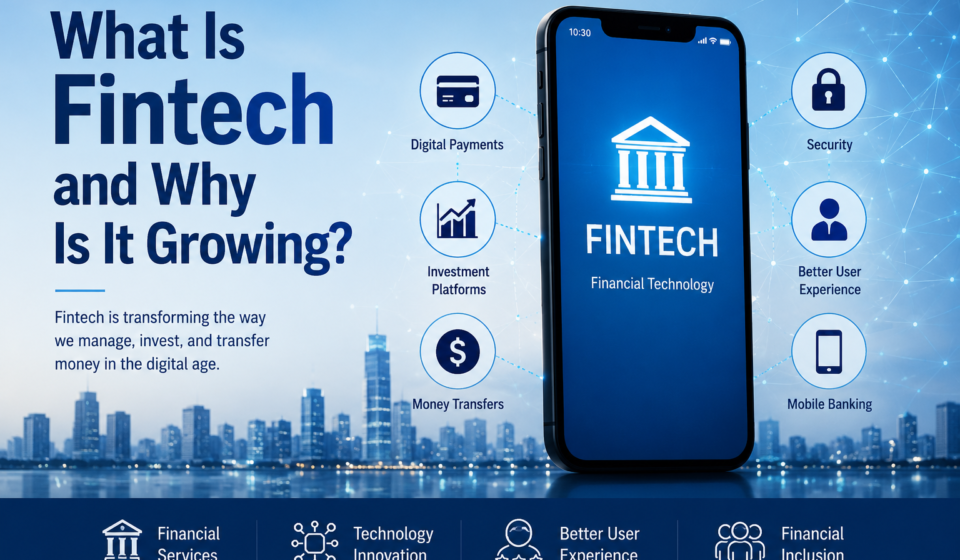
Fintech refers to the use of technology to improve, automate, and innovate financial services and financial systems. It encompasses a broad range of products, services, platforms, and technologies designed to make financial activities more efficient, accessible, secure, and convenient.
At its core, fintech combines finance and technology to solve problems associated with traditional financial systems. Instead of relying solely on physical bank branches, paperwork, and manual processes, fintech companies leverage digital technologies to streamline financial services.
Fintech solutions can include mobile banking applications, online payment systems, digital lending platforms, investment applications, cryptocurrency services, insurance technologies, budgeting tools, and financial management software.
The goal of fintech is not only to digitize existing financial services but also to create entirely new ways of managing money and accessing financial resources.
The Evolution of Fintech
Although fintech is often viewed as a modern phenomenon, the relationship between finance and technology has existed for many decades.
Early financial technologies included telegraph systems used for financial communication, automated teller machines, electronic stock exchanges, and computerized banking systems. These innovations laid the foundation for today’s digital financial ecosystem.
The rise of the internet in the 1990s accelerated financial digitization by enabling online banking, electronic payments, and internet-based financial services.
The introduction of smartphones created even greater opportunities for financial innovation. Mobile applications allowed consumers to conduct financial transactions anytime and anywhere.
In recent years, advancements in cloud computing, artificial intelligence, blockchain technology, big data analytics, and machine learning have further expanded the capabilities of fintech companies.
Today, fintech represents one of the fastest-growing sectors in the global economy.
How Fintech Works
Fintech companies use technology platforms to deliver financial products and services more efficiently than traditional financial institutions.
These platforms typically rely on software applications, cloud infrastructure, data analytics, artificial intelligence, application programming interfaces, and secure digital networks.
For example, a mobile payment application allows users to transfer money electronically through encrypted systems connected to banks and payment networks. Similarly, an online lending platform uses algorithms and financial data to assess creditworthiness and approve loans.
Many fintech companies operate through digital platforms that automate processes previously handled manually. This automation reduces costs, improves speed, and enhances customer experiences.
Fintech solutions often integrate multiple technologies to provide seamless financial services that can be accessed through computers, smartphones, tablets, and other digital devices.
Major Categories of Fintech
The fintech industry encompasses numerous sectors and specialized services.
Digital Payments
Digital payments represent one of the largest and most widely adopted areas of fintech. Consumers and businesses increasingly use electronic payment systems, mobile wallets, contactless payments, and online transaction platforms.
Digital payment technologies reduce reliance on cash and enable faster, more secure financial transactions.
Digital Banking
Digital banking allows customers to access banking services through websites and mobile applications. Many financial institutions now offer fully digital banking experiences, while some fintech companies operate as digital-only banks.
Digital banking improves accessibility, convenience, and operational efficiency.
Lending and Credit Technology
Fintech companies have transformed lending by offering online loan applications, automated credit assessments, peer-to-peer lending platforms, and alternative financing solutions.
Advanced data analysis allows lenders to evaluate borrowers more efficiently and expand access to credit.
Investment Technology
Investment technology platforms provide digital investment management services, automated portfolio management, stock trading applications, and financial planning tools.
These platforms have increased access to investing opportunities for individual investors.
Insurance Technology
Insurance technology, often called insurtech, uses digital tools to improve insurance products, underwriting processes, claims management, and customer experiences.
Artificial intelligence and data analytics help insurers operate more efficiently and provide personalized services.
Cryptocurrency and Blockchain
Cryptocurrency platforms and blockchain technologies represent another major segment of fintech. These technologies enable decentralized financial transactions, digital assets, and innovative payment systems.
While still evolving, blockchain-based financial services continue to attract significant interest and investment.
Why Fintech Is Growing Rapidly
Several factors have contributed to the remarkable growth of the fintech industry.
Technological Advancements
Rapid advancements in computing power, internet infrastructure, mobile technology, artificial intelligence, and cloud computing have created new opportunities for financial innovation.
These technologies enable fintech companies to develop sophisticated financial products at lower costs and greater speed than traditional financial institutions.
Changing Consumer Expectations
Modern consumers increasingly expect financial services to be fast, convenient, personalized, and available around the clock.
Traditional banking systems often struggle to meet these expectations due to legacy infrastructure and operational constraints.
Fintech companies have responded by creating user-friendly platforms that prioritize customer experience and accessibility.
Smartphone Adoption
The widespread adoption of smartphones has dramatically expanded access to digital financial services.
Mobile devices allow consumers to manage finances, make payments, invest money, and apply for financial products from virtually any location.
As smartphone penetration continues to increase globally, fintech adoption is expected to grow further.
Financial Inclusion
Fintech has expanded access to financial services for individuals and businesses that previously lacked access to traditional banking systems.
Digital platforms can reach underserved populations more efficiently and at lower cost than conventional financial institutions.
Improved financial inclusion has become one of fintech’s most significant social and economic contributions.
Investment and Venture Capital
The fintech industry has attracted substantial investment from venture capital firms, institutional investors, and financial institutions.
These investments have fueled innovation, accelerated growth, and supported the development of new technologies and business models.
Strong investor confidence continues to drive expansion across many fintech sectors.
How Fintech Is Transforming Banking
Fintech has significantly reshaped the traditional banking industry.
Banks increasingly adopt digital technologies to improve customer experiences, reduce costs, and remain competitive. Many financial institutions have developed mobile applications, digital payment systems, and online financial services in response to fintech innovation.
Fintech companies have introduced faster account opening processes, real-time payments, automated customer service, and personalized financial management tools.
Competition from fintech has encouraged traditional banks to modernize their infrastructure and prioritize digital transformation.
Rather than replacing banks entirely, fintech often complements and enhances existing financial services.
The relationship between banks and fintech companies continues to evolve through partnerships, acquisitions, and collaborative innovation.
The Role of Artificial Intelligence in Fintech
Artificial intelligence has become a major driver of fintech innovation.
Financial institutions and fintech companies use artificial intelligence to automate processes, analyze customer behavior, detect fraud, assess credit risk, and improve decision-making.
Machine learning algorithms can process vast amounts of financial data quickly and accurately, allowing companies to identify patterns and provide personalized recommendations.
Artificial intelligence also powers chatbots, virtual assistants, robo-advisors, and automated investment platforms.
As artificial intelligence technology continues to improve, its applications within fintech are expected to expand significantly.
The Importance of Blockchain Technology
Blockchain technology has introduced new possibilities for financial services and digital transactions.
A blockchain is a decentralized digital ledger that records transactions securely and transparently. Because records cannot easily be altered, blockchain technology offers potential advantages in security, efficiency, and trust.
Blockchain applications extend beyond cryptocurrencies and include payment systems, smart contracts, identity verification, asset management, and international money transfers.
Although challenges remain regarding regulation, scalability, and adoption, blockchain continues to influence the evolution of financial technology.
Benefits of Fintech
Fintech offers numerous advantages to consumers, businesses, and financial institutions.
One of the most important benefits is convenience. Financial services can be accessed anytime through digital devices.
Fintech also improves efficiency by automating processes and reducing transaction times.
Lower operational costs often allow fintech companies to provide competitive pricing and reduced fees.
Accessibility has increased significantly, enabling more individuals to participate in financial systems.
Personalized financial services, enhanced transparency, and improved user experiences further contribute to fintech’s popularity.
Innovation within the fintech sector continues to create new opportunities for economic growth and financial inclusion.
Challenges Facing the Fintech Industry
Despite its rapid growth, the fintech industry faces several important challenges.
Cybersecurity remains a major concern due to the sensitive nature of financial information and transactions.
Regulatory compliance presents another challenge, as governments seek to balance innovation with consumer protection and financial stability.
Privacy concerns have increased as fintech companies collect and analyze large amounts of personal and financial data.
Competition within the industry is intense, requiring companies to continually innovate and adapt.
Economic uncertainty, technological risks, and evolving consumer expectations can also affect fintech growth and profitability.
Successfully addressing these challenges will be essential for the industry’s long-term success.
Fintech and Financial Inclusion
One of fintech’s most significant contributions is improving financial inclusion worldwide.
Many individuals and small businesses have historically lacked access to traditional financial services due to geographic, economic, or institutional barriers.
Digital financial platforms can provide banking, payments, lending, insurance, and investment services to underserved populations at lower costs.
Mobile payment systems and digital wallets have been particularly effective in expanding financial access in developing economies.
Greater financial inclusion can contribute to economic development, entrepreneurship, poverty reduction, and improved quality of life.
As technology becomes more widely available, fintech may continue to reduce financial inequality globally.
The Future of Fintech
The future of fintech will likely involve continued innovation and deeper integration of technology into financial services.
Artificial intelligence, blockchain, quantum computing, embedded finance, decentralized finance, and open banking are expected to shape future developments.
Consumers may experience increasingly personalized financial services, automated financial planning, and seamless digital transactions.
Cross-border payments, digital currencies, and financial ecosystems may become more interconnected and efficient.
Regulatory frameworks will also continue evolving to address emerging technologies and risks.
While the future remains uncertain, fintech is expected to remain a major force shaping the global financial landscape.
Conclusion
Fintech represents one of the most significant transformations in the history of financial services. By combining technology and finance, fintech companies have created innovative solutions that improve accessibility, efficiency, convenience, and financial inclusion.
The rapid growth of fintech has been driven by technological advancements, changing consumer expectations, widespread smartphone adoption, and increasing demand for digital financial services.
Although challenges related to security, regulation, and competition remain, fintech continues to reshape banking, investing, payments, lending, and other financial activities.
Understanding fintech is essential for consumers, businesses, investors, and policymakers seeking to navigate the rapidly evolving financial world. As technology continues to advance, fintech will likely play an even greater role in shaping the future of global finance.
Frequently Asked Questions
What does fintech mean?
Fintech stands for financial technology and refers to the use of technology to improve and innovate financial products and services.
Why is fintech growing so quickly?
Fintech is growing due to technological advancements, changing consumer expectations, smartphone adoption, financial inclusion efforts, and increased investment.
What are examples of fintech services?
Examples include digital payments, online banking, investment applications, digital lending platforms, cryptocurrency exchanges, and financial management tools.
How does fintech differ from traditional banking?
Fintech uses technology to provide faster, more convenient, and often lower-cost financial services compared to traditional banking systems.
Is fintech safe?
Many fintech companies implement strong security measures, including encryption, authentication systems, and fraud detection technologies. However, users should still practice good cybersecurity habits.
What role does artificial intelligence play in fintech?
Artificial intelligence helps automate processes, detect fraud, assess risk, provide customer support, and deliver personalized financial services.
Can fintech improve financial inclusion?
Yes. Fintech can expand access to financial services for underserved populations by providing affordable and accessible digital financial solutions.
What is the future of fintech?
The future of fintech will likely involve greater use of artificial intelligence, blockchain, digital currencies, embedded finance, and personalized financial services.