
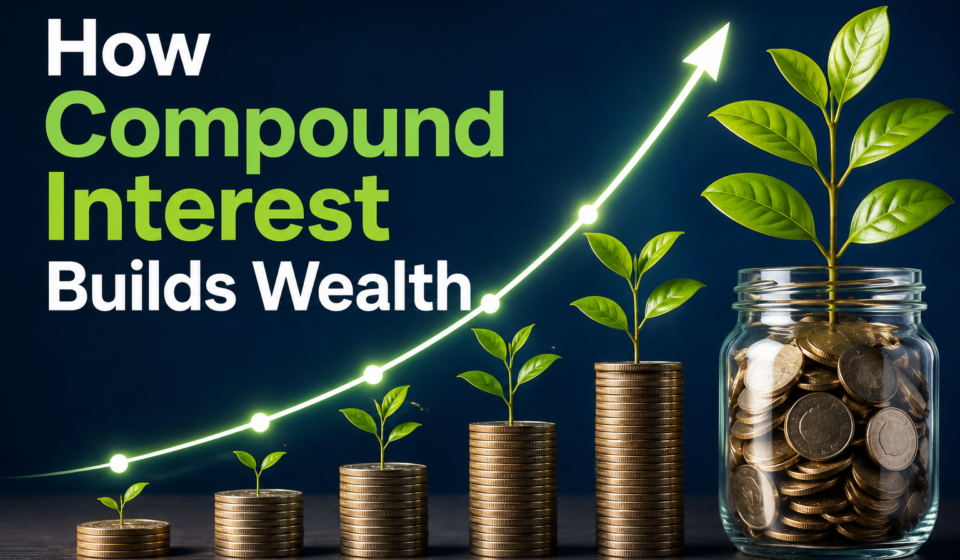

Compound interest is often called one of the most powerful concepts in personal finance because it allows your money to grow not only on your original investment but also on the interest it has already earned. Over time, this creates a snowball effect that can significantly increase your wealth, even if you start with relatively small investments.
Whether you’re saving for retirement, building an emergency fund, investing in stocks, or growing a long-term portfolio, understanding compound interest can help you make smarter financial decisions. The earlier you begin investing, the more time your money has to benefit from compounding.
This guide explains how compound interest works, why it is so powerful, the factors that influence it, and practical strategies for using it to build long-term wealth.
What Is Compound Interest?
Compound interest is the process of earning interest on both your original principal and the interest that has already been added to your investment or savings.
Unlike simple interest, which is calculated only on the initial amount invested, compound interest allows your investment to generate returns on previous returns. As this cycle continues, the value of your investment can grow at an accelerating rate.
This is why compound interest is often referred to as “interest on interest.”
How Compound Interest Works
Imagine you invest money in an account that earns annual interest.
At the end of the first year, you earn interest on your initial investment.
During the second year, you earn interest on both the original amount and the interest earned in the first year.
Each new interest payment becomes part of your investment, allowing future earnings to be calculated on an increasingly larger balance.
Over many years, this compounding effect can produce substantial growth.
Compound Interest vs Simple Interest
Although both methods generate returns, they work differently.
| Feature | Compound Interest | Simple Interest |
|---|---|---|
| Interest Calculated On | Principal plus accumulated interest | Principal only |
| Growth Rate | Accelerates over time | Remains consistent |
| Long-Term Returns | Typically higher | Usually lower |
| Best For | Long-term investing and saving | Short-term lending or borrowing |
The longer your investment remains untouched, the greater the advantage of compound interest.
Why Time Is the Most Powerful Factor
Time is one of the biggest drivers of compound growth.
The earlier you begin investing, the more opportunities your money has to earn additional returns.
For example:
- Someone who starts investing in their twenties generally has more time for compounding than someone who starts in their forties.
- Even modest, consistent contributions made over many years can potentially grow into a substantial portfolio.
Starting early often matters more than investing large amounts later in life.
Factors That Affect Compound Interest
Several variables influence how much wealth compound interest can generate.
Initial Investment
A larger starting investment provides a stronger foundation for future growth.
Rate of Return
Higher average returns generally produce faster compound growth, although higher returns often come with greater investment risk.
Time Horizon
Longer investment periods allow compounding to work more effectively.
Contribution Frequency
Making regular contributions increases the amount available to compound over time.
Compounding Frequency
Interest may be compounded:
- Daily
- Monthly
- Quarterly
- Semi-annually
- Annually
More frequent compounding generally results in slightly higher long-term returns.
Benefits of Compound Interest
Compound interest offers several important advantages.
Accelerated Wealth Growth
Returns begin generating additional returns, creating exponential growth over time.
Long-Term Financial Security
Consistent investing supported by compounding can help individuals prepare for retirement and other major financial goals.
Passive Growth
Once investments are made, compound interest continues working automatically as earnings are reinvested.
Encourages Consistent Saving
Regular investments combined with compounding reward disciplined financial habits.
Helps Offset Inflation
Long-term investments that earn returns above inflation can help preserve purchasing power over time.
Where Compound Interest Can Work
Compound interest applies to many financial products and investments.
Examples include:
- Savings accounts
- Certificates of deposit
- Retirement accounts
- Mutual funds
- Exchange-traded funds (ETFs)
- Dividend-reinvesting stocks
- Bonds
- Investment portfolios
The specific returns and compounding methods vary depending on the investment.
The Importance of Reinvesting Earnings
Reinvesting earnings is essential for maximizing compound growth.
Instead of withdrawing interest or dividends, many investors choose to reinvest them.
This increases the investment balance, allowing future returns to compound on a larger amount.
Over long periods, reinvestment can significantly improve total investment growth.
Common Mistakes That Reduce Compound Growth
Many investors unintentionally limit the benefits of compounding.
Common mistakes include:
- Starting too late
- Withdrawing investment earnings too early
- Investing inconsistently
- Frequently buying and selling investments
- Holding excessive cash for long periods
- Ignoring long-term financial goals
- Allowing emotions to influence investment decisions
Maintaining a disciplined, long-term approach often produces better results.
Compound Interest and Retirement Planning
Compound interest is one of the foundations of retirement investing.
Retirement accounts benefit from:
- Long investment horizons
- Regular contributions
- Reinvested earnings
- Portfolio growth over decades
Even relatively small monthly investments can grow significantly when compounded over many years.
The Rule of 72
The Rule of 72 is a simple way to estimate how long it may take for an investment to double.
Divide 72 by the expected annual rate of return.
For example:
- At an annual return of 8%, an investment may take approximately 9 years to double (72 ÷ 8 = 9).
This rule provides a quick estimate rather than a guaranteed outcome.
Common Misconceptions About Compound Interest
Several myths often create confusion.
Compound Interest Only Works for Large Investments
Small, regular investments can also benefit significantly from long-term compounding.
You Need High Returns to Build Wealth
Consistency and time are often more important than chasing exceptionally high returns.
Compounding Happens Overnight
Compound growth becomes more noticeable over longer periods, making patience an essential part of investing.
Saving Is Enough
While saving is important, long-term investing may provide greater opportunities for compound growth, depending on individual goals and risk tolerance.
Technology and Compound Investing
Modern financial technology has made compounding easier than ever.
Many investment platforms now offer:
- Automatic recurring investments
- Dividend reinvestment programs
- Portfolio tracking
- Goal-based investing
- Retirement planning tools
- Robo-advisors
These features help investors maintain consistent investment habits.
Strategies to Maximize Compound Interest
To make the most of compounding:
- Start investing as early as possible.
- Invest consistently over time.
- Reinvest dividends and interest whenever appropriate.
- Maintain a diversified portfolio.
- Stay invested during market fluctuations.
- Review your investment strategy periodically.
- Avoid unnecessary withdrawals.
- Focus on long-term financial goals.
Patience and consistency are often the greatest contributors to successful compound growth.
Final Thoughts
Compound interest is one of the most effective tools for building long-term wealth. By allowing your investments to earn returns on both the original principal and accumulated earnings, compounding creates a powerful cycle of growth that becomes more significant over time.
Although market performance and investment returns can never be guaranteed, starting early, investing consistently, reinvesting earnings, and maintaining a long-term perspective can help maximize the benefits of compound interest. Whether you’re saving for retirement, education, or financial independence, understanding and applying the principles of compounding can play a vital role in achieving your financial goals.
Frequently Asked Questions (FAQs)
1. What is compound interest?
Compound interest is interest earned on both the original investment and the accumulated interest from previous periods, allowing investments to grow faster over time.
2. Why is compound interest important?
Compound interest helps investments grow exponentially, making it one of the most effective ways to build long-term wealth through consistent saving and investing.
3. How is compound interest different from simple interest?
Simple interest is calculated only on the original principal, while compound interest is calculated on both the principal and previously earned interest.
4. Does starting early really make a difference?
Yes. The earlier you begin investing, the more time your money has to benefit from compounding, which can significantly increase long-term growth.
5. What investments use compound interest?
Compound growth can occur through savings accounts, certificates of deposit, retirement accounts, mutual funds, ETFs, dividend-reinvesting stocks, bonds, and other investment portfolios.
6. How often is compound interest calculated?
Compounding may occur daily, monthly, quarterly, semi-annually, or annually, depending on the financial product or investment.
7. What is the Rule of 72?
The Rule of 72 is a simple formula used to estimate how long it may take for an investment to double by dividing 72 by the expected annual rate of return.
8. Can small investments benefit from compound interest?
Absolutely. Even modest, regular contributions can grow substantially over long periods through the power of compounding.
9. What mistakes reduce the benefits of compound interest?
Common mistakes include starting late, withdrawing earnings too early, investing inconsistently, reacting emotionally to market movements, and failing to reinvest returns.
10. What is the best way to maximize compound interest?
Start investing early, contribute regularly, reinvest earnings, maintain a diversified portfolio, avoid unnecessary withdrawals, and stay focused on your long-term financial objectives.


