
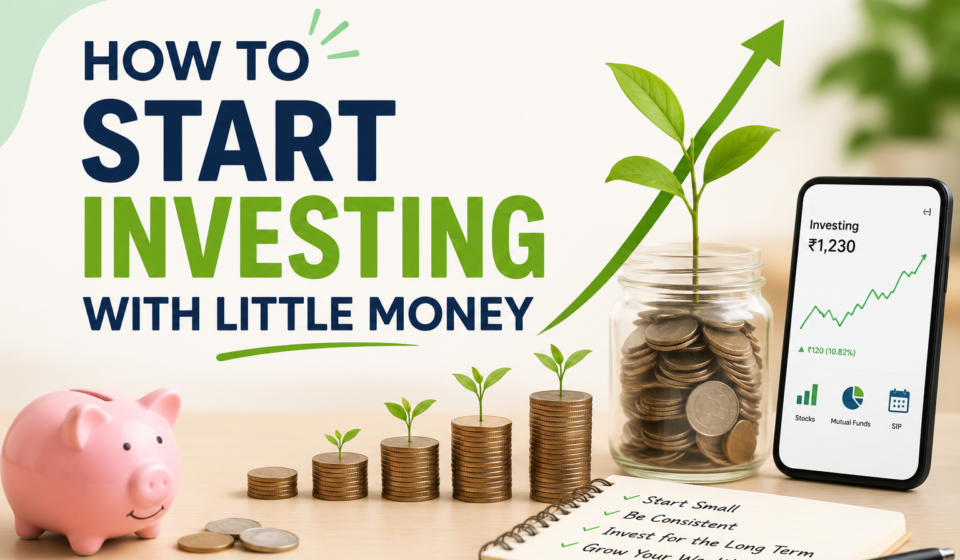

Many people believe that investing is only for wealthy individuals with large amounts of disposable income. This misconception has prevented millions of people from taking advantage of one of the most powerful tools for building long-term wealth. In reality, modern financial markets have made investing more accessible than ever before, allowing individuals to begin their investment journey with very small amounts of money.
The ability to invest with limited capital has transformed personal finance. Thanks to technological advancements, mobile investment platforms, fractional shares, low-cost index funds, and automated investment services, nearly anyone can start building wealth regardless of their current financial situation.
Starting to invest early, even with small amounts, can have a significant impact over time due to the power of compound growth. While investing does involve risks, understanding the fundamentals and developing a disciplined approach can help individuals achieve their long-term financial goals.
Whether you are a student, young professional, entrepreneur, or someone looking to improve your financial future, this guide explains how to start investing with little money, the available investment options, common mistakes to avoid, and strategies for building wealth gradually.
Why Investing Matters
Investing is the process of allocating money into assets with the expectation of generating future returns. Unlike saving, which primarily focuses on preserving money, investing seeks to grow wealth over time.
One of the biggest challenges facing individuals today is inflation. As the cost of living rises, money held solely in savings accounts may lose purchasing power over time. Investing provides an opportunity to earn returns that may exceed inflation and help preserve and increase wealth.
Investing also supports important financial goals such as retirement planning, home purchases, education funding, business development, and financial independence.
The earlier a person begins investing, the more time their money has to grow through compounding, making even small investments potentially significant over the long term.
Can You Really Start Investing with Little Money?
The simple answer is yes.
In the past, investing often required substantial amounts of capital, access to financial advisors, and high brokerage fees. Today, technological innovation has dramatically lowered these barriers.
Many investment platforms allow users to open accounts with little or no minimum deposit requirements. Investors can purchase fractional shares, invest in exchange-traded funds, contribute to automated portfolios, and access diversified investment products with relatively small amounts of money.
Starting with a small investment amount is often more important than waiting until larger sums become available. Developing consistent investing habits can create substantial long-term benefits.
The key principle is that investing success depends more on consistency and time than on the size of an initial investment.
Understanding Your Financial Situation First
Before beginning to invest, it is important to evaluate your current financial situation.
Investors should understand their income, expenses, debt obligations, savings, and financial goals. Creating a budget helps determine how much money can realistically be allocated toward investing on a regular basis.
Building an emergency fund before investing heavily is generally recommended. Emergency savings can help cover unexpected expenses and reduce the likelihood of needing to sell investments during unfavorable market conditions.
High-interest debt should also be addressed when possible, as the cost of borrowing may exceed potential investment returns.
Establishing a strong financial foundation supports more effective and sustainable investing decisions.
Setting Clear Investment Goals
Successful investing begins with clearly defined objectives.
Some individuals invest to prepare for retirement, while others may seek to purchase a home, fund education expenses, build passive income, or achieve financial independence.
Investment goals influence important decisions such as asset selection, risk tolerance, investment timeline, and portfolio strategy.
Short-term goals may require more conservative investments, while long-term goals often allow investors to tolerate greater market volatility in pursuit of higher returns.
Clearly identifying financial objectives helps create a disciplined and focused investment strategy.
Understanding Risk and Return
Every investment involves some level of risk.
Generally, investments with the potential for higher returns also involve greater uncertainty and volatility. Understanding this relationship is essential for making informed decisions.
Stocks, for example, have historically generated strong long-term returns but can experience significant short-term price fluctuations. Bonds typically offer lower returns but may provide greater stability.
Risk tolerance varies among individuals depending on factors such as age, financial circumstances, investment experience, and personal preferences.
Beginning investors should avoid taking unnecessary risks and focus on building diversified portfolios aligned with their comfort levels and financial objectives.
Understanding risk helps investors maintain realistic expectations and avoid emotional decision-making.
Starting with Small Regular Investments
One of the most effective strategies for beginning investors is making regular contributions regardless of market conditions.
This approach, commonly known as systematic investing, allows individuals to invest consistently over time rather than attempting to predict market movements.
Regular investing offers several advantages. It encourages financial discipline, reduces emotional decision-making, and allows investors to purchase assets at varying price levels.
Even small monthly contributions can accumulate significantly over long periods due to compound growth.
For many investors, consistency matters more than the size of individual contributions.
Developing the habit of investing regularly often contributes more to long-term success than attempting to identify perfect investment opportunities.
Using Fractional Shares
Fractional shares have made investing more accessible than ever before.
Traditionally, investors needed sufficient funds to purchase entire shares of companies. Some stocks can trade at prices that exceed hundreds or even thousands of dollars per share.
Fractional investing allows individuals to purchase portions of shares based on the amount they wish to invest rather than the full share price.
For example, an investor can allocate a small amount of money toward ownership of a large company without needing to purchase a complete share.
This innovation enables beginning investors to diversify their portfolios and participate in financial markets with minimal capital.
Fractional investing has become increasingly popular through modern brokerage platforms and investment applications.
Investing in Index Funds
Index funds are often considered one of the best investment options for beginners.
An index fund is designed to track the performance of a specific market index rather than attempting to outperform the market through active management.
These funds provide instant diversification by investing in numerous companies or securities simultaneously.
Index funds generally offer lower fees, reduced complexity, and broad market exposure.
Because they do not rely on frequent trading decisions, index funds can help investors avoid many common behavioral mistakes.
Long-term investors often use index funds as foundational components of diversified investment portfolios.
For individuals starting with limited capital, index funds offer an efficient and accessible way to participate in financial markets.
Understanding Exchange-Traded Funds
Exchange-traded funds, commonly known as ETFs, have become increasingly popular among investors.
ETFs combine features of mutual funds and stocks. They provide diversified exposure to various assets while trading on stock exchanges throughout the day.
Investors can access broad market indexes, specific industries, international markets, bonds, commodities, and numerous other investment categories through ETFs.
Many ETFs offer low management fees and high levels of diversification.
Because ETFs can often be purchased through fractional investing programs, they provide accessible opportunities for investors with limited financial resources.
Their flexibility and cost efficiency make them attractive options for beginning investors.
Exploring Automated Investing Platforms
Automated investing platforms, sometimes called robo-advisors, have simplified the investment process considerably.
These platforms use algorithms and financial information provided by users to create and manage diversified investment portfolios.
Investors answer questions regarding financial goals, investment timelines, and risk tolerance. The platform then automatically constructs and manages an appropriate portfolio.
Automated investing reduces the complexity of investment management and often requires relatively low minimum investment amounts.
Many platforms also provide automatic portfolio rebalancing and recurring investment features.
For beginners who lack investment experience or confidence, automated investing can provide a convenient and cost-effective starting point.
Investing Through Retirement Accounts
Retirement accounts often provide valuable opportunities for beginning investors.
Many retirement plans offer tax advantages that can improve long-term investment outcomes.
Employer-sponsored retirement plans may include employer matching contributions, effectively providing additional investment capital.
Individual retirement accounts and other retirement savings vehicles allow investors to build wealth over extended periods while benefiting from potential tax advantages.
Beginning to invest for retirement early, even with small contributions, can significantly improve future financial security due to the effects of compound growth.
Retirement investing remains one of the most important components of long-term financial planning.
The Power of Compound Growth
Compound growth represents one of the most powerful concepts in investing.
Compounding occurs when investment earnings generate additional earnings over time. Rather than earning returns solely on original investments, investors earn returns on both principal and accumulated gains.
The effects of compounding become increasingly significant over longer time periods.
Small investments made consistently over many years can potentially grow into substantial amounts.
This principle explains why beginning to invest early often matters more than investing large amounts later in life.
Patience, consistency, and long-term thinking allow investors to maximize the benefits of compound growth.
Understanding compounding helps reinforce the importance of starting early and remaining invested.
Common Mistakes New Investors Should Avoid
Beginning investors often make mistakes that can negatively affect long-term results.
One common mistake is attempting to time the market. Predicting short-term market movements consistently is extremely difficult, even for experienced professionals.
Another mistake involves investing without diversification. Concentrating investments in a single asset or company increases risk significantly.
Emotional decision-making can also harm investment performance. Fear and excitement often lead investors to buy and sell at unfavorable times.
Ignoring fees and expenses may reduce long-term returns substantially.
Some investors also expect unrealistic returns and become discouraged during periods of market volatility.
Avoiding these mistakes requires discipline, education, patience, and a long-term perspective.
Building Good Investment Habits
Successful investing depends heavily on developing strong habits.
Regular investing, maintaining diversification, monitoring financial goals, and avoiding emotional decisions contribute to long-term success.
Investors should continue learning about financial markets and personal finance throughout their lives.
Reviewing investment strategies periodically helps ensure alignment with changing financial circumstances and goals.
Maintaining realistic expectations is equally important. Markets experience fluctuations, and temporary declines are normal components of long-term investing.
Developing disciplined habits often matters more than finding extraordinary investment opportunities.
Consistency and patience remain among the most valuable traits for investors.
Technology Has Made Investing Easier
Technology has dramatically expanded access to investing opportunities.
Mobile applications, online brokerages, educational resources, financial planning tools, and automated investment platforms have simplified the investment process.
Investors can now research investments, monitor portfolios, execute transactions, and access educational materials from virtually anywhere.
Lower fees and improved accessibility have democratized investing and reduced barriers that previously limited participation.
Technology continues to create new opportunities for individuals to build wealth and improve financial literacy.
As financial technology evolves, investing is likely to become even more accessible and personalized.
Long-Term Thinking Is Essential
One of the most important principles of investing is maintaining a long-term perspective.
Financial markets naturally experience periods of growth, decline, uncertainty, and volatility. Short-term market movements can create emotional reactions that lead to poor decisions.
Long-term investors focus on their financial goals rather than temporary market fluctuations.
Historically, diversified investments held over extended periods have generally produced positive returns despite short-term volatility.
Patience allows investors to benefit from economic growth, corporate innovation, and compound returns.
Building wealth through investing is typically a gradual process rather than a quick path to financial success.
Maintaining a long-term mindset helps investors remain disciplined and focused.
Conclusion
Starting to invest with little money is entirely possible and increasingly accessible. Modern financial technology, fractional investing, index funds, exchange-traded funds, and automated investment platforms have created opportunities for individuals at virtually every income level.
The most important step is simply getting started. Small, consistent investments made over time can produce meaningful financial results due to the power of compound growth.
Successful investing does not require large amounts of money, specialized expertise, or perfect market timing. Instead, it requires discipline, patience, education, and a commitment to long-term financial goals.
By understanding investment fundamentals, managing risk appropriately, and developing strong financial habits, individuals can begin building wealth regardless of their starting point.
The journey toward financial security often begins with a single investment decision, no matter how small.
Frequently Asked Questions
Can I start investing with very little money?
Yes. Many investment platforms allow individuals to start investing with small amounts through fractional shares, index funds, and automated investment services.
What is the minimum amount needed to start investing?
The minimum amount varies by platform, but some services allow investors to begin with just a few dollars.
What are the best investments for beginners?
Many beginners choose diversified investments such as index funds, exchange-traded funds, and automated investment portfolios.
Is investing risky?
All investments involve some level of risk. However, diversification and long-term investing strategies can help manage risk effectively.
What are fractional shares?
Fractional shares allow investors to purchase portions of stocks rather than entire shares, making investing more affordable.
Should I pay off debt before investing?
High-interest debt should often be addressed before making significant investments, although individual circumstances vary.
How often should I invest?
Many financial experts recommend investing regularly through consistent contributions over time.
Why is starting early important?
Starting early allows investors to benefit from compound growth, which can significantly increase wealth over long periods.


