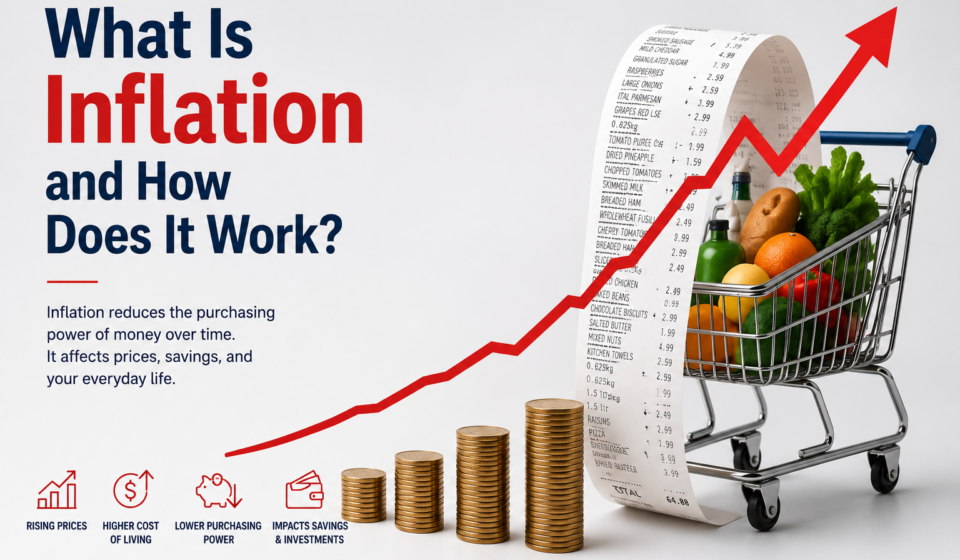

Inflation is one of the most important economic concepts affecting individuals, businesses, governments, and financial markets worldwide. Whether you are buying groceries, paying rent, investing in the stock market, or planning for retirement, inflation influences your purchasing power and financial decisions. Despite its widespread impact, many people find inflation difficult to understand because it involves complex economic forces and constantly changing market conditions.
At its simplest, inflation refers to the gradual increase in the prices of goods and services over time. As prices rise, the purchasing power of money decreases, meaning that the same amount of money buys fewer goods and services than before. While moderate inflation is considered a normal and healthy part of a growing economy, high or unpredictable inflation can create financial challenges and economic instability.
Understanding how inflation works can help individuals make better financial decisions, protect their savings, and plan more effectively for the future. This guide explores what inflation is, what causes it, how it affects the economy, the different types of inflation, and strategies for managing its impact.
Understanding Inflation
Inflation is the rate at which the general price level of goods and services increases over a specific period. Rather than referring to the price increase of a single product, inflation measures the overall rise in prices across an economy.
For example, if a loaf of bread costs $2 today and costs $2.20 next year, that price increase may reflect inflation. Similarly, if housing costs, transportation expenses, healthcare services, and consumer products all become more expensive, the overall purchasing power of consumers declines.
Economists and governments closely monitor inflation because it serves as an important indicator of economic health. A moderate level of inflation often signals economic growth and increased consumer demand. However, excessive inflation can reduce living standards and create uncertainty.
Inflation affects everyone because it influences wages, savings, investments, borrowing costs, and the overall cost of living.
How Inflation Works
Inflation occurs when the demand for goods and services exceeds available supply or when production costs increase significantly. As prices rise, consumers need more money to purchase the same goods and services they previously bought at lower prices.
Consider a simple example. Suppose a cup of coffee costs $3 today. If inflation increases by 5 percent over the next year, that same cup of coffee may cost $3.15. While the increase appears small for a single purchase, inflation affects thousands of products and services throughout the economy.
Over long periods, even moderate inflation can significantly reduce purchasing power. This is why financial planning, investing, and income growth are important for maintaining living standards.
Inflation is not necessarily harmful when it remains moderate and predictable. Central banks often target a specific inflation rate to encourage economic growth while maintaining price stability.
What Causes Inflation?
Inflation can result from various economic factors. Economists generally categorize the causes of inflation into several major types.
Demand-Pull Inflation
Demand-pull inflation occurs when consumer demand exceeds the economy’s ability to produce goods and services. When people have more money to spend and demand rises faster than supply, businesses often increase prices.
This type of inflation commonly occurs during periods of economic growth, low unemployment, and strong consumer confidence. Increased government spending or lower interest rates may also stimulate demand and contribute to demand-pull inflation.
For example, if consumers suddenly increase spending on housing, automobiles, and electronics, businesses may raise prices due to increased demand.
Cost-Push Inflation
Cost-push inflation occurs when the costs of producing goods and services increase. Businesses often pass these higher costs to consumers through increased prices.
Several factors can contribute to cost-push inflation, including rising wages, higher energy prices, increased transportation costs, supply chain disruptions, and shortages of raw materials.
For instance, if oil prices rise significantly, transportation and manufacturing costs increase, leading to higher prices for many products throughout the economy.
Built-In Inflation
Built-in inflation results from expectations about future inflation. Workers may demand higher wages because they expect prices to rise, while businesses increase prices to cover higher labor costs.
This creates a wage-price spiral in which rising wages and increasing prices reinforce each other over time.
Inflation expectations play a significant role in shaping economic behavior and can influence actual inflation rates.
How Inflation Is Measured
Governments and economists use several methods to measure inflation. One of the most commonly used measures is the Consumer Price Index, often referred to as the CPI.
The Consumer Price Index tracks changes in the prices of a basket of goods and services commonly purchased by households. This basket typically includes housing, food, transportation, healthcare, education, clothing, and entertainment expenses.
Another important measure is the Producer Price Index, which tracks changes in prices received by producers and manufacturers. This index can provide early indications of future consumer inflation.
Some economists also monitor the Personal Consumption Expenditures Index, which measures changes in consumer spending patterns and prices.
These indicators help policymakers, businesses, and investors understand inflation trends and make informed decisions.
Types of Inflation
Inflation can occur at varying levels of intensity and duration.
Moderate Inflation
Moderate inflation refers to a gradual and manageable increase in prices. Many economists consider annual inflation rates of around two percent to be healthy for economic growth.
Moderate inflation encourages spending and investment while allowing businesses and workers to adjust to changing economic conditions.
High Inflation
High inflation occurs when prices rise rapidly over a relatively short period. High inflation can reduce purchasing power, increase economic uncertainty, and negatively impact financial planning.
Consumers may struggle to afford essential goods and services, while businesses face challenges related to pricing and cost management.
Hyperinflation
Hyperinflation is an extreme form of inflation characterized by exceptionally rapid and uncontrollable price increases.
During hyperinflation, currency values can collapse, savings may become worthless, and economic systems may experience severe disruption.
Although hyperinflation is relatively rare, historical examples demonstrate its devastating economic and social consequences.
Deflation
Deflation is the opposite of inflation and occurs when overall prices decline over time.
While lower prices may initially appear beneficial, prolonged deflation can discourage spending, reduce business investment, increase unemployment, and slow economic growth.
Both excessive inflation and prolonged deflation can create significant economic challenges.
The Role of Central Banks
Central banks play a critical role in managing inflation and maintaining economic stability.
Institutions such as the Federal Reserve in the United States, the European Central Bank, and other national central banks use monetary policy tools to influence inflation rates.
One of the primary tools available to central banks is interest rate adjustment. When inflation rises too quickly, central banks may increase interest rates to reduce borrowing and spending. Higher interest rates often slow economic activity and help control inflation.
Conversely, during periods of weak economic growth or low inflation, central banks may lower interest rates to encourage borrowing, investment, and consumer spending.
Central banks also influence inflation through money supply management and various financial market operations.
Maintaining stable inflation remains one of the primary objectives of modern monetary policy.
How Inflation Affects Consumers
Inflation directly impacts consumers by increasing the cost of everyday goods and services.
As prices rise, households may find that their incomes purchase fewer products than before. This reduction in purchasing power can affect living standards, savings rates, and financial planning.
Essential expenses such as food, housing, healthcare, transportation, and utilities often become more expensive during inflationary periods.
Individuals with fixed incomes, such as retirees, may experience particular challenges because their income may not increase at the same rate as prices.
Consumers often respond to inflation by adjusting spending habits, seeking lower-cost alternatives, or increasing efforts to save and invest.
How Inflation Affects Savings
Inflation can significantly impact personal savings. If money earns less interest than the inflation rate, its purchasing power gradually declines.
For example, if savings earn two percent annual interest while inflation rises by four percent, the real value of those savings decreases over time.
This is one reason why many financial experts encourage individuals to invest at least part of their savings in assets that may generate returns exceeding inflation.
Understanding inflation risk is an important component of long-term financial planning and wealth preservation.
How Inflation Affects Investments
Inflation influences various types of investments differently.
Stocks may provide some protection against inflation because companies can often increase prices and grow revenues over time. However, inflation can also reduce corporate profits and create market volatility.
Bonds may become less attractive during periods of rising inflation because fixed interest payments lose purchasing power.
Real estate investments sometimes perform well during inflationary periods because property values and rental income may increase.
Commodities such as gold and energy products are often viewed as potential inflation hedges, although their performance can vary significantly.
Diversification remains an important strategy for managing inflation-related investment risks.
How Inflation Affects Businesses
Businesses experience both opportunities and challenges during inflationary periods.
Companies may benefit from increased revenues if they can successfully raise prices. However, higher operating costs, supply chain disruptions, labor expenses, and borrowing costs can reduce profitability.
Businesses must carefully manage pricing strategies, inventory levels, wage adjustments, and investment decisions during periods of inflation.
Inflation uncertainty can also discourage long-term planning and capital investment.
Successful businesses often adapt by improving efficiency, controlling costs, and adjusting their operations to changing economic conditions.
Why Some Inflation Is Considered Healthy
Although inflation often receives negative attention, economists generally believe that moderate inflation benefits economic growth.
Moderate inflation encourages spending and investment because consumers and businesses anticipate that prices may rise in the future.
It also allows wages and prices to adjust more easily, supports economic expansion, and reduces the risk of prolonged deflation.
Most central banks aim to maintain low and stable inflation rather than eliminating inflation entirely.
The challenge lies in maintaining a balance between economic growth and price stability.
How to Protect Yourself From Inflation
Individuals can take several steps to reduce the impact of inflation on their finances.
Developing strong saving habits and maintaining an emergency fund can provide financial stability during periods of rising prices.
Investing in diversified assets may help generate returns that outpace inflation over time.
Improving skills, education, and earning potential can increase income and help offset rising living costs.
Regularly reviewing budgets and controlling unnecessary expenses can also improve financial resilience.
Long-term financial planning remains one of the most effective strategies for managing inflation risk.
Inflation and the Global Economy
Inflation affects economies worldwide and often extends beyond national borders.
Global supply chains, international trade, commodity prices, currency exchange rates, and geopolitical events all influence inflation trends.
For example, disruptions in energy markets or transportation systems can increase prices across multiple countries simultaneously.
Because economies are increasingly interconnected, policymakers and financial institutions closely monitor global inflation developments.
International cooperation and economic policy coordination often play important roles in managing inflationary pressures.
Conclusion
Inflation is a fundamental economic force that affects nearly every aspect of financial life. It influences purchasing power, savings, investments, business operations, government policy, and overall economic growth.
While moderate inflation is generally considered a normal and healthy part of a functioning economy, excessive inflation can create significant financial challenges and economic uncertainty.
Understanding how inflation works empowers individuals to make informed financial decisions, protect their purchasing power, and plan effectively for the future.
By developing sound financial habits, maintaining diversified investments, and staying informed about economic conditions, individuals can better navigate the challenges and opportunities created by inflation.
Frequently Asked Questions
What is inflation in simple terms?
Inflation is the increase in the overall prices of goods and services over time, which reduces the purchasing power of money.
What causes inflation?
Inflation can result from increased consumer demand, rising production costs, higher wages, supply shortages, and changes in monetary policy.
Is inflation always bad?
No. Moderate inflation is generally considered healthy because it supports economic growth and encourages spending and investment.
How is inflation measured?
Inflation is commonly measured using indicators such as the Consumer Price Index, Producer Price Index, and Personal Consumption Expenditures Index.
How does inflation affect savings?
Inflation reduces the purchasing power of savings if the returns earned on savings do not keep pace with rising prices.
Can investments protect against inflation?
Certain investments, including stocks, real estate, and some commodities, may help protect against inflation over long periods.
What is hyperinflation?
Hyperinflation is an extreme and rapid increase in prices that can severely damage an economy and reduce the value of a country’s currency.
Why do central banks try to control inflation?
Central banks aim to maintain stable inflation because excessive inflation or deflation can create economic instability and negatively affect growth.